
The turmeric market in 2025 is exhibiting unprecedented volatility and price surges, triggered by a confluence of environmental disruptions and supply chain challenges in India, the world’s largest turmeric producer. At ASN Agro Foods, we understand that buyers, traders, and industry stakeholders keenly monitor these developments, as turmeric’s price fluctuations ripple through global spice, food, and supplement markets. This comprehensive analysis unpacks the drivers behind the current turmeric shortage, assesses quality and production challenges, evaluates the global market landscape, and forecasts future trends that will shape pricing and supply dynamics.
Current Market Overview: Price Surge and Supply Constraints
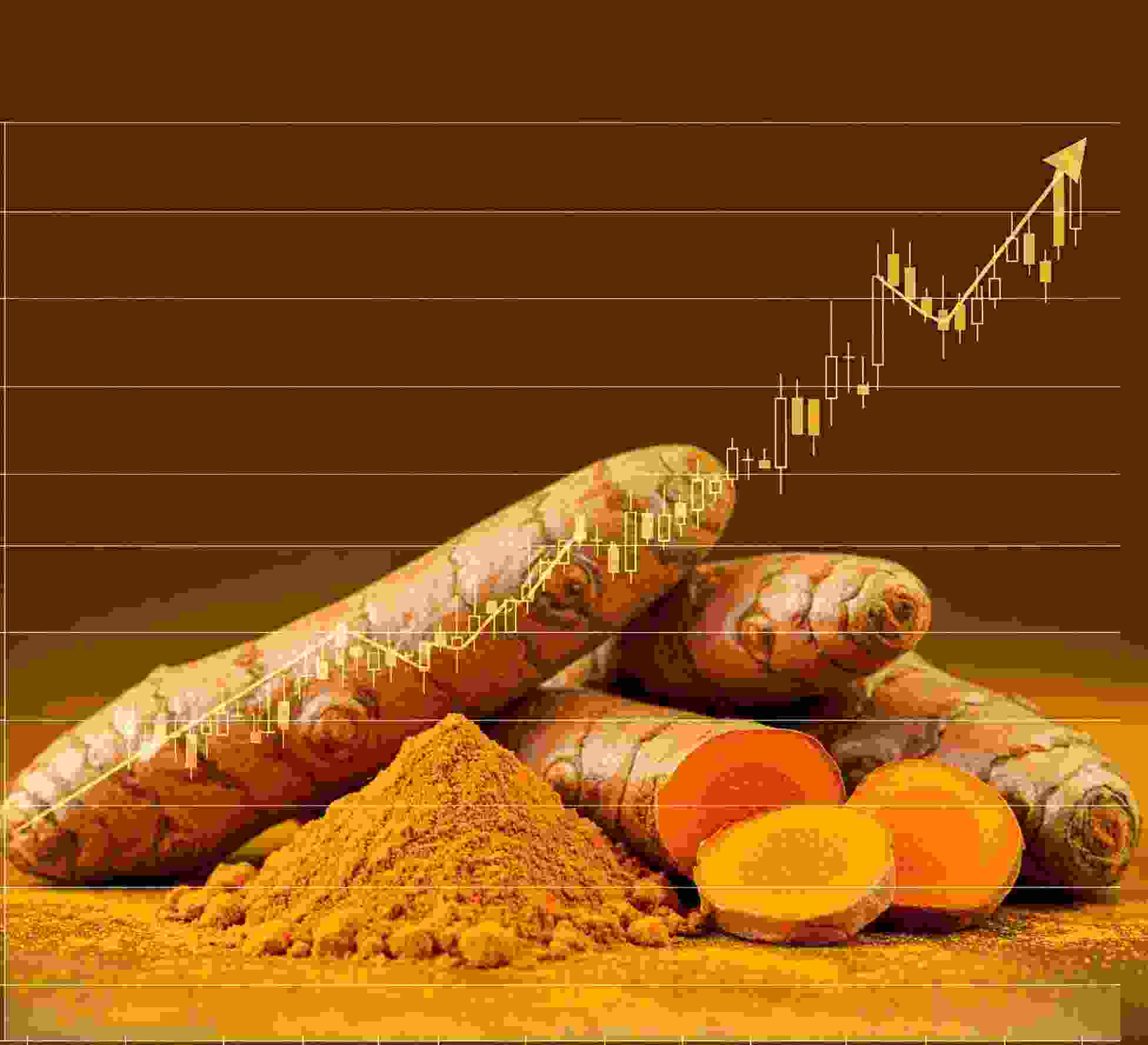
As of early April 2025, turmeric prices in India have sharply escalated, with local market transactions reporting prices nearing USD 1.92 per kilogram—levels unseen in recent years. This surge is underpinned by a dramatic contraction in turmeric stock from approximately 1.2 million bags to just 500,000 bags, alongside a steep decline in daily arrivals at major trading hubs (Momex, 2025). The 2023 and 2024 crops currently trade at USD 1.66 and USD 1.68 per kg respectively, while the 2025 crop from regions like Erode is offered at USD 1.70 per kg ex-market, expected to escalate further once freight costs are factored in.
The global Free on Board (FOB) prices are similarly trending upward, with forecasts indicating a range of 1.70 to 1.80 €/kg if new product arrivals remain subdued (Financial Times, 2025). The bullish market sentiment is sustained by robust export demand from key countries in the Middle East and Europe, combined with constrained inventories and quality-related production setbacks.
Production Challenges: Climate Impact and Quality Concerns
India dominates the global turmeric market with an estimated 80% share of production, cultivating approximately 1.1 million tonnes annually over 330,000 hectares predominantly in Tamil Nadu, Maharashtra, Telangana, and Andhra Pradesh (ICRIER, 2025). However, erratic weather patterns, including unseasonal heavy rainfall, floods, and dry spells, have severely impacted the 2024-2025 harvest cycle. Regions such as Nanded and Telangana report yield reductions between 10-15% attributable to small rhizomes, crop rot, and fungal diseases exacerbated by climate anomalies (Muthiah et al., 2025; Financial Times, 2025).
These adverse conditions have not only reduced volume but also compromised quality parameters, notably the curcumin concentration—the active compound that drives turmeric’s health and culinary value. Untimely rains have diminished curcumin content and altered sensory profiles, raising concerns among exporters and end-users about product consistency (Das et al., 2023). Quality variations affect pricing and export competitiveness, especially as international markets increasingly demand high-curcumin and organic turmeric varieties.
Supply Chain Disruptions and Logistical Hurdles
Beyond agronomic challenges, supply chain inefficiencies have intensified scarcity. Logistical bottlenecks, including transportation delays and elevated fuel costs, have constrained turmeric movement from production zones to domestic and international buyers (Financial Times, 2025). The aftermath of the COVID-19 pandemic and geopolitical tensions have triggered persistent disruptions in freight availability and customs clearance, adding to cost pressures and delivery uncertainties.
Moreover, the widespread practice of stockpiling by traders anticipating further price rises has tightened market liquidity. Bulk purchasing during minor price dips (USD 0.06–0.08 per kg) is a strategic response to expected prolonged shortages, further amplifying market volatility (Momex, 2025).
Global Market Dynamics: Exporters, Importers, and Competition
India’s turmeric exports surged by 13% between April and December 2024, with key importing nations including the UAE, Saudi Arabia, the United Kingdom, Bahrain, and Oman sustaining strong demand despite domestic supply fluctuations (Momex, 2025). Interestingly, imports into India also spiked by over 84% year-on-year in the same period, reflecting internal supply gaps, though December 2024 saw a sharp 44.66% month-on-month decline in imports, signaling tightening availability (Momex, 2025).
While India remains the undisputed leader, other turmeric-producing countries such as Vietnam, Peru, Costa Rica, Thailand, and Egypt are expanding production and export capabilities. Vietnamese turmeric, noted for competitive pricing and improving quality, is gaining traction in international markets, presenting emerging competition to Indian exporters (Financial Times, 2025).
Demand Drivers: Health, Wellness, and Culinary Uses
The upward price trajectory is underpinned by strong global demand growth, particularly fueled by turmeric’s rising status in health and wellness sectors. The high curcumin content makes turmeric a sought-after ingredient in nutraceuticals, dietary supplements, functional foods, and cosmetics. North America and Europe are witnessing a surge in turmeric product consumption, reflecting consumer preferences for natural anti-inflammatory and antioxidant agents (UpWellness, 2025; 360iResearch, 2025).
Domestic consumption in India remains steady at approximately 6.5 to 7.5 million bags annually, while export demand continues to grow, projected at 2.8 to 3.0 million bags (Spice Market Outlook, 2024). The intersection of culinary tradition and health consciousness drives sustained demand, intensifying pressure on limited supplies.
Government and Industry Initiatives: Strategic Responses
The Indian government and industry bodies have recognized the criticality of stabilizing turmeric production and exports. The recently established National Turmeric Board aims to enhance coordination across agricultural, pharmaceutical, and export stakeholders to boost productivity, improve quality standards, and streamline export processes (Livemint, 2025). Efforts include promoting high-curcumin cultivars such as Lakadong and Rajapuri, advocating sustainable farming practices, and addressing pesticide residue and heavy metal contamination issues to meet stringent international quality norms.
Technological innovations in post-harvest processing, including advanced drying techniques, quality control assays, and packaging improvements, are being adopted to preserve curcumin potency and extend shelf life (Financial Times, 2025). Additionally, mutual recognition agreements (MRAs) for organic certifications with key markets like the EU and the USA are expected to reduce compliance costs and facilitate smoother trade flows (ICRIER, 2025).
Price Forecast and Market Outlook
Analysts forecast that if supply constraints persist through mid-2025, turmeric prices in India may reach or exceed USD 1.92 per kg, reflecting a nearly 15% increase from current crop prices (Momex, 2025). Global FOB prices are expected to hover in the 1.70–1.80 €/kg range, contingent on production recovery and inventory replenishment.
However, market experts caution that price volatility will remain significant due to climatic unpredictability, ongoing geopolitical tensions affecting trade logistics, and possible policy changes in key import regions. Strategic stock management by exporters and buyers, alongside technological upgrades and government interventions, will be critical in mitigating extreme price shocks.
Cross-Disciplinary Insights: Economic and Environmental Intersections
The turmeric price surge exemplifies the intricate interplay between environmental factors and global trade economics. Climate change-induced weather extremes have direct agronomic impacts, causing yield declines and quality fluctuations. These ecological stresses translate into economic consequences—supply shortages, price inflation, and market uncertainty—that reverberate through agricultural communities and global supply chains.
At the same time, the elevated price environment presents economic opportunities for turmeric farmers and exporters willing to adopt improved cultivars and sustainable practices. Export-led growth, supported by government policies and international cooperation on standards, can enhance India’s position as a global turmeric hub while incentivizing climate-resilient agriculture.
Case Study 1: Nanded Region Yield Reductions and Quality Challenges
Nanded, a significant turmeric-producing region in Maharashtra, has experienced a 10-15% yield reduction due to small-size rhizomes and fungal infections aggravated by erratic rainfall (Momex, 2025). Farmers here have reported decreased curcumin content in harvested turmeric, undermining product quality and marketability.
This localized challenge illustrates how microclimatic variations and disease pressures compound broader supply issues, necessitating targeted agronomic interventions such as disease-resistant seed varieties, improved fungicide application, and adaptive irrigation scheduling.
Case Study 2: Vietnamese Turmeric Gaining Market Share Amid Indian Supply Strains
Vietnam, traditionally a minor player, is capitalizing on its lower production costs and consistent quality to expand turmeric exports, especially to European markets seeking alternative sources amid Indian supply disruptions (Financial Times, 2025). Vietnamese producers have invested in organic certification and value-added processing, allowing competitive pricing without compromising quality.
This case underscores the importance of diversification in global spice supply chains and highlights the competitive pressures Indian turmeric exporters may face if production challenges persist.
Technical Deep Dive: Curcumin Content and Quality Control
Curcumin concentration is the principal quality metric for turmeric, influencing both health efficacy and market value. Analytical techniques such as High-Performance Liquid Chromatography (HPLC) are standard for quantifying curcuminoids, with stringent thresholds set by bodies like the United States Pharmacopeia (USP) (Das et al., 2023).
However, recent studies reveal variability in curcumin content among Indian turmeric batches, partly due to climatic stress and post-harvest processing inefficiencies. Innovations including enhanced drying protocols, bioavailability-enhancing formulations (e.g., addition of piperine), and real-time quality testing are vital to maintaining product standards and consumer trust.
Emerging Trends and Future Directions
- Climate Smart Agriculture: Adoption of climate-resilient cultivars and precision farming techniques to mitigate weather impact and improve yield stability.
- Digital Supply Chain Integration: Leveraging blockchain and IoT for transparent tracking of turmeric quality, provenance, and logistics to enhance market confidence.
- Value-Added Products: Expansion of turmeric oleoresins, extracts, and fortified formulations to meet growing nutraceutical demand.
- Sustainability Certifications: Growth in organic and Fair Trade turmeric production to capture premium market segments.
- Policy Advocacy: Continued push for streamlined export regulations and international standard harmonization to reduce trade barriers.
Summary and Strategic Recommendations
The 2025 turmeric price surge reflects a complex web of climate challenges, supply chain disruptions, quality concerns, and growing global demand. India’s dominant position faces tests from environmental volatility and emerging competitors, but strategic policy initiatives, technological adoption, and market diversification offer pathways to stabilizing and expanding turmeric exports.
For buyers and industry participants, proactive engagement with supply chain partners, investment in quality assurance, and forecasting based on climatic and market signals are essential for navigating the turbulent turmeric market landscape.
Tables
Table 1: Turmeric Price Trends in India (2023-2025)
| Crop Year | Price (USD/kg | Notes |
| 2023 |
1.66 |
Stable but rising due to demand |
| 2024 | 1.68 | Slight increase with supply challenges |
| 2025 | 1.70 (ex-market), anticipated up to 1.92 | Driven by low stocks and export demand |
Source: Momex (2025)
Table 2: Major Turmeric Exporters and Market Shares (2024)
| Country | Export Value (USD Million) | Global Market Share (%) |
| India |
231 |
80 |
| Fiji |
12.9 |
4.5 |
| Myanmar |
11.1 |
3.8 |
| Others |
31.0 |
12.7 |
Source: Trade Map (2025)
Table 3: Key Turmeric Importers and Import Values (2024)
| Country | Import Value (USD Million) |
| United States |
50.1 |
| Bangladesh |
37.4 |
| India |
15.1 |
| UAE |
14.5 |
| Saudi Arabia |
13.2 |
India imports turmeric mainly for domestic blending and processing.
Source: Trade Map (2025)
Table 4: Impact of Climate and Disease on Turmeric Yield in Selected Indian Regions
| Region | Yield Reduction (%) | Primary Cause | Quality Impact |
| Nanded |
10-15 |
Small rhizomes, crop rot | Reduced curcumin content |
| Telangana |
12 |
Fungal diseases | Variable sensory properties |
| Maharashtra |
15 |
Flooding and waterlogging | Lower dry matter content |
Source: Momex (2025); Muthiah et al. (2025)
In conclusion, the turmeric market in 2025 is at a pivotal juncture. Climatic adversities and logistical challenges have precipitated a supply squeeze that has propelled prices to historic highs. However, ongoing government initiatives, technological advancements, and shifting global demand patterns portend opportunities for growth and resilience. Stakeholders must navigate this dynamic landscape with informed strategies to capitalize on turmeric’s enduring global appeal as both a spice and a functional ingredient.